Food Crops Background
3 Ways Food in School Helps the Environment
The way we teach matters as much as the way we feed.
The way we teach matters as much as the way we feed.
We know that food in school matters for kids’ health and well-being. But did you know it also makes a big difference for the environment? Here are three ways that food in schools is helping to protect our planet—now and into our kids’ futures.
When schools buy food that’s grown or produced close to home, they’re investing in farms and food systems that protect the environment. In the United States, transportation is the biggest contributor to the air-polluting emissions that cause climate change. Local foods travel shorter distances, meaning less pollution—and fresher, more nutritious foods on kids’ plates.
Even more important than the distance food travels is how that food was made. Local foods often come from smaller farms, which are more likely to grow food in ways that are better for the environment. They use fewer pesticides that can poison the land and water, they grow a variety of foods that make soil healthier and farms more resilient, and they waste less water and other resources.
Farm to school programs work to connect schools with local, small-scale farmers to provide the fresh ingredients that go into students’ meals and snacks. In the 2024–25 school year, FoodCorps members connected with nearly 800 local farmers and suppliers to support farm to school in communities around the country. Local sourcing keeps these small businesses up and running while bringing the benefits to kids, communities, and our environment.
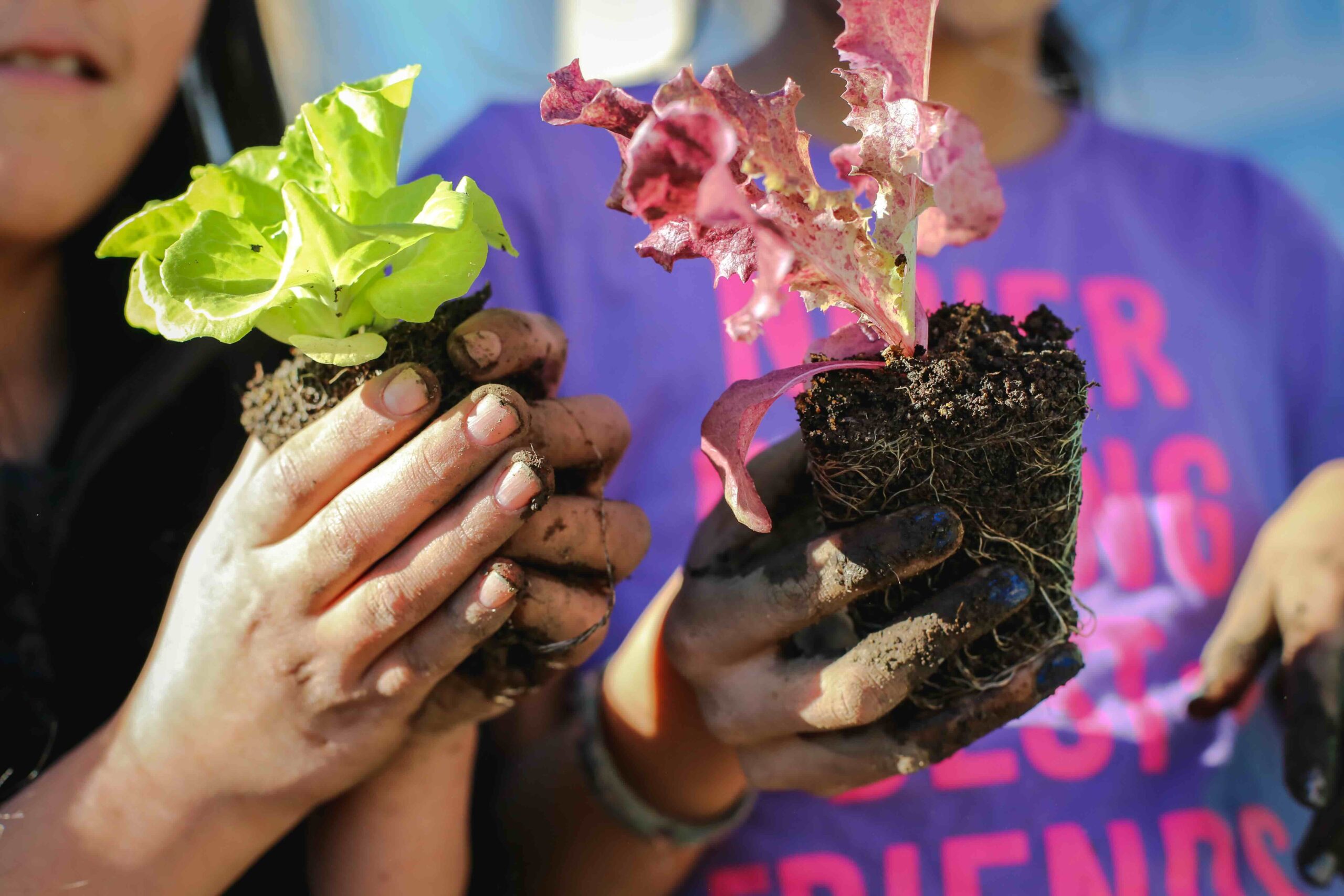
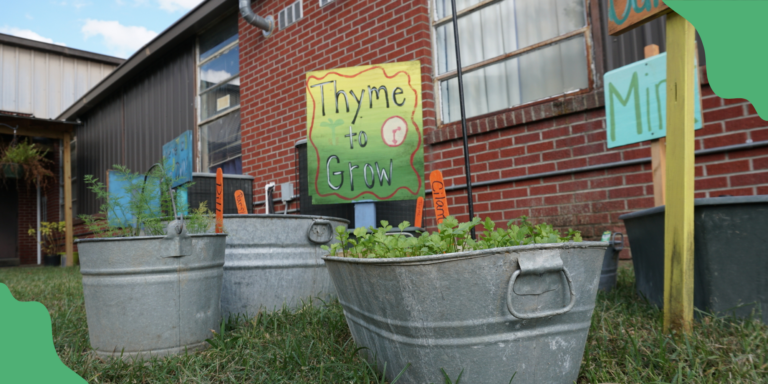
Hands-on learning isn’t just a fun way to get kids excited about eating fruits and vegetables. Research shows that school garden programs inspire a love of nature and a desire to care for the environment. When kids get to grow food themselves, they learn where food comes from and how our food choices have an impact on the environment. They start to see how they can protect our planet—and believe they can make a difference.
Garden education also puts plant-based foods front and center, giving kids a chance to try and fall in love with foods that have a smaller impact on the environment. This opens the door for school food programs to offer more plant-forward meals, which create less pollution and waste less water than meals that feature meat—and can even cut costs for schools.
Learning how to grow food also begins to teach kids about food sovereignty. Rooted in Indigenous movements, food sovereignty means having the right to define and create a food system that honors and reflects our cultures, traditions, and our relationship with the environment. Traditional Indigenous food practices, like those taught through the First Nations Development Institute’s Native Farm to School, show kids how our food systems can and should care for our environment.
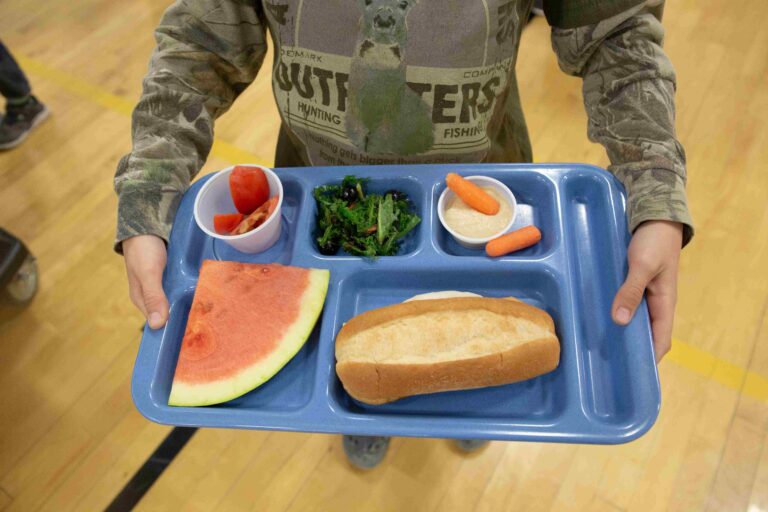
Schools see another environmental benefit when offering local food alongside garden education: less food wasted. School cafeterias feed millions of children every day, and schools play a big role in reducing the amount of food that ends up in landfills. Locally sourced foods mean fewer supply chain problems that can lead to spoiled food, while growing fruits and vegetables in the school garden makes kids more likely to eat the nutritious foods that show up on their lunch trays.
Studies have found easy but impactful choices that schools can make to get kids to eat more nutritious food and throw away less. We know food education works: a Columbia University plate waste study found that kids who took part in FoodCorps lessons ate up to 3 times more fruits and veggies than kids who didn’t. Other changes are shown to help: meals that reflect kids’ cultures and preferences, mealtime adjustments like longer lunch periods and recess before lunch, and simple shifts like offering sliced fruit instead of whole and moving breakfast from the cafeteria to the classroom.
More schools are also composting to keep uneaten food from going to waste—some even using that compost in their gardens to bring the environmental benefits full circle. Getting kids involved—through learning about food waste and tracking it in their cafeterias—is shown to reduce waste even further. (Find activities about food waste in FoodCorps Lessons.)
The more our schools do to make the environment a priority, the bigger the impact—not just on what kids eat now, but how they’ll make a difference when they grow up.
Related read: Local Food in Schools: 3 Things to Know|“Local food—food that’s grown or produced relatively close by to the people who eat it—is widely known to be good for our bodies and our communities. And there’s a growing movement to make local food a reliable part of the school day, from cooking class to the garden to the lunch line. So what makes local food so special?”
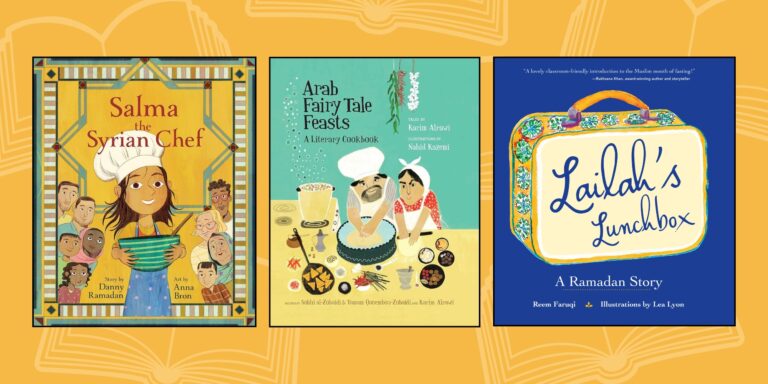
Children’s Books Celebrating Arab American Heritage
The Policy Brief, Winter 2026: What Happened and What’s Ahead
19 Plant Jokes for Kids and Families