Food Crops Background
Ask a Kindred Fellow: Roberto Gonzalez
Kindred Fellow Roberto Gonzalez discusses his hopes for the future of school nutrition.
New FoodCorps merch is here! Shop the collection & support our work in schools nationwide. Shop Now →
Kindred Fellow Roberto Gonzalez discusses his hopes for the future of school nutrition.
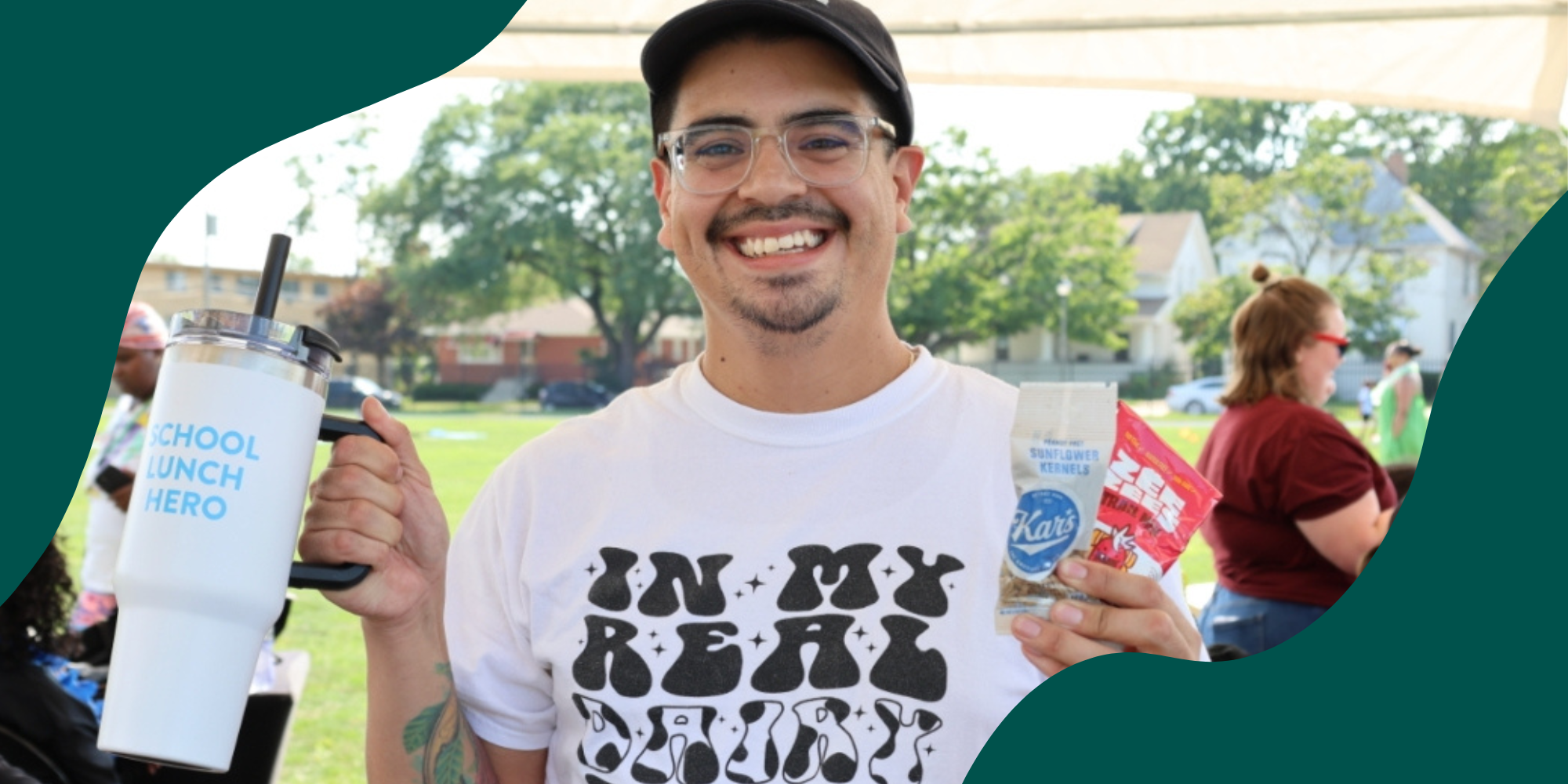
One of the many ways FoodCorps equips school food leaders to make change is through our Kindred Fellowship for School Nutrition Leaders. The Kindred Fellowship is built on our 15 years of evidence-based, community-centered programming and designed to elevate the work these change agents are already doing across the country.
Roberto Gonzalez is an alum from our inaugural class of Kindred Fellows and the nutrition coordinator for Proviso Township High Schools District 209, a school district in the Chicagoland suburbs serving about 4,000 students across three high schools. Roberto sat down with us to discuss the impact of his time as a fellow—and his hopes for the future of school nutrition right in his home community.
Roberto: I’m a nutrition coordinator for Proviso Township High Schools in a suburb by the Chicagoland area. I grew up in Franklin Park, which is the town over, so I know the neighborhood, and I know the communities that are working there, so it’s cool to be back in that similar area and working for that same community that helped me during my high school upbringing.
I’m fairly new to school nutrition; I’ve only been doing it for three years. Previously, I worked in a nutrition education role at a community health center through AmeriCorps. After that term, I became a benefit outreach coordinator with the Greater Chicago Food Depository, where I was helping people on the west side of Chicago enroll in their SNAP and medical benefits. …
On the dietetics side, I would try to teach people about [foods like]butternut squash and garbanzo beans, and I realized I can’t teach them when they’ve never even learned about these foods. I started thinking, “Where’s that gap for the people to learn it before they end up here?” That’s when I went back to school to become a registered dietitian, which led me to where I am now.
My role sits more like an assistant manager, in a sense, for the food and nutrition department. We’re really focusing right now on trying to bring in some more scratch-cooked meals. We’ve been trying to get out and be more like a customer service to students—doing taste testing, surveys, and a lot of rapport-building with the students. We’re trying to actually bring it to the students to intertwine them, to actually build it for them so that it’s a more inclusive food service.
What I liked about it was the [focus on] storytelling, which I feel is my struggle. I’m really good at reading policy and understanding, but I struggle with explaining it so that it makes sense to the average person that doesn’t like to read a 150-page scientific document.
That storytelling aspect and trying to get the messaging across go hand-in-hand with change management and advocacy. With change, you never know how people are going to accept it, or if they’re even going to want to do the change, because change is difficult. It’s something that sometimes is needed, but how do we actually do it when we don’t really have the tools or understand how to do it?
The fellowship helps with building the strategy and understanding how to use examples and the data and making sure you have that trust with your community, with your students, with your staff, so that they understand why you’re doing the changes.
Our main goal right now is to start implementing more scratch cooking. The past couple years, we’ve done a semi-speed scratch, where we may be using a boxed product, but then uplifting it with something fresh. Next year, our goal would be to do something 100% from scratch, such as building a salad. Maybe we do the dressings by scratch and then learn how to chop the vegetables, or we maybe build a salad bar, something a little bit more enticing for students to come through.
We’re also using the students’ [feedback]. Building that data and having those surveys with the students, has been really helpful. The end goal would be to make sure that the food is something that they want to eat, but also that it’s more culturally and community relevant because it’s something that they’ve put input into.
My biggest idea would be for the kids to start seeing different ways to have the food and learn how to use the food and slowly build our own recipes. So, if we’re doing fresh green beans, we have a recipe card for the fresh green beans that we did at school, and, like, the little spice blend that they have, and now the student could go home and do that themselves, so they have more of that access and ability to use the food that they’re familiar with now.
I would say I’ve been more intentional about how I lead my staff. And when I speak to upper management, it’s like, “Hey, what are our goals here and what are we truly trying to achieve?” so that we’re not just constantly going back and going over the same hurdle. Now it’s more concrete, like, “This is our goal, and this is what we’re working towards. Now, how as a team are we gonna put these pieces together to get here? How can we start moving so that it’s …more of a sustainable system?” For the chance that, you know, we retire, or somebody leaves, this system should be able to keep itself running once we’re long gone.
Roberto’s answers have been lightly edited for length and clarity. Thanks to Janvika Shah for interviewing and writing support.
Sign up for FoodCorps emails to get fresh updates to your inbox straight from the Skillet.
Ask a Kindred Fellow: Ruby Forde Lets Change Take Root

New Congress, New Champions, One Shared Commitment to Kids
From the Archive: The Science of Service (2020)