Food Crops Background
Congress Cut SNAP. States Got the Bill. Kids Face the Consequences.
We cannot expect healthier eating habits while eliminating the programs that support them.
NEW Food Education in the Classroom Microcredential for K-5 educators! Next session: Nov. 2 – Dec. 13.
We cannot expect healthier eating habits while eliminating the programs that support them.
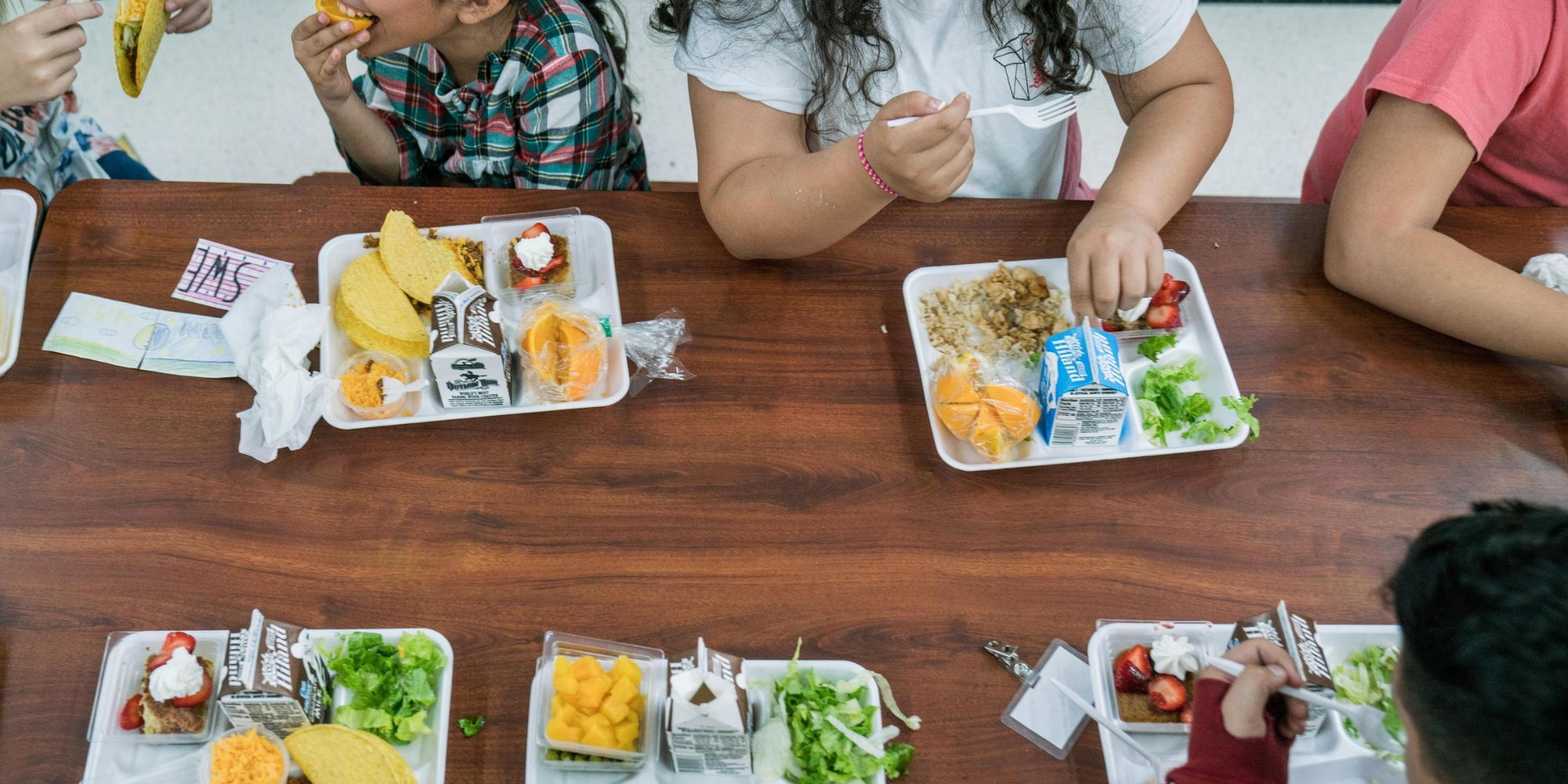
The decisions Congress made in Washington last summer are now landing in state budgets. Their consequences could reach all the way to the school lunch line.
On October 1, states began paying 75% of the administrative costs of the Supplemental Nutrition Assistance Program (SNAP), up from 50%. This change is part of H.R. 1, the One Big Beautiful Bill Act, signed into law in July 2025.
But this is only the beginning.
Over the next several years, states will face additional financial pressures as they implement sweeping changes to SNAP. Those decisions will affect more than household grocery budgets. They could reshape how schools feed children, how communities provide nutrition education, and how school nutrition professionals deliver healthy meals.
At FoodCorps, we know that what happens to SNAP doesn’t stay at the grocery store. It follows children into their classrooms and cafeterias.
H.R. 1 reduced projected federal SNAP spending by approximately $186 billion through 2034, with changes unfolding in stages:
The legislation passed in 2025. The financial consequences are only beginning to arrive.
For decades, the federal government and states shared SNAP administrative costs equally. Now states must shoulder three-quarters of those expenses, including staffing, eligibility processing, technology systems, and program oversight.
And another significant financial obligation is approaching.
Beginning in fiscal year 2028, states with SNAP payment error rates of 6% or higher will generally be required to contribute between 5% and 15% of benefit costs, depending on their error rates. A payment error rate measures how accurately a state determines and distributes SNAP benefits, including instances when households receive too much or too little assistance. These errors are often administrative and do not necessarily indicate fraud. Mistakes can happen because of paperwork errors, incorrect benefit calculations, or changes in a family’s circumstances.
But even when these mistakes are unintentional, they can lead to significant new costs for states under H.R. 1. Under H.R. 1, higher error rates mean greater costs for states, adding another financial burden as they work to maintain access to food assistance. Certain states will receive implementation delays.
For governors and state legislators, the challenge is substantial. Finding additional dollars for SNAP could mean difficult tradeoffs involving education, public health, and other essential services.
States are also being asked to reduce payment errors while taking on greater administrative costs. This is no small task. Determining SNAP benefits requires states to track changes in household income, family size, and eligibility, often with limited staffing and outdated technology. Improving accuracy requires additional investments in caseworkers, training, and technology, just as states are being asked to shoulder more of the program’s costs.
For families, insufficient administrative funding could mean longer application processing times and additional barriers to receiving assistance.
When federal funding retreats, the need doesn’t disappear. It becomes a state budget decision.
SNAP and school meals are deeply connected, even though they are often discussed as separate programs.
Children in households receiving SNAP are generally automatically eligible for free school meals through direct certification. That same process helps schools qualify for the Community Eligibility Provision (CEP), which allows eligible schools in high-need communities to serve breakfast and lunch to every student at no cost.
When SNAP participation declines, fewer children may be directly certified. This can affect a school’s CEP eligibility and reimbursement levels, making universal free meals more difficult to sustain.
The impact may unfold gradually as schools and districts reassess their participation and available resources.
This matters for school nutrition programs already navigating rising food costs, staffing shortages, and limited resources.
It also matters for the people preparing and serving those meals. School nutrition professionals need stable funding, adequate staffing, professional development, and modern kitchen infrastructure to provide the fresh, nourishing meals children deserve.
We cannot strengthen school meals while weakening the systems that help children access them.
H.R. 1 also eliminated SNAP-Ed, a federal program that helped families build practical skills around healthy eating, food preparation, and nutrition.
For years, SNAP-Ed supported nutrition education in schools, food banks, community organizations, and other settings. Its elimination removed an important resource from communities working to make healthy eating accessible and sustainable.
At FoodCorps, we believe children deserve more than access to nutritious food. They deserve opportunities to learn where food comes from, develop cooking skills, explore new ingredients, and build lifelong positive relationships with food.
These experiences help connect what children learn in the classroom with what they eat in the cafeteria and at home.
That is why restoring federal investment in nutrition education must be part of the conversation. Programs like SNAP-Ed are not extras. They help communities turn access to nourishing food into lifelong knowledge and habits.
We cannot expect healthier eating habits while eliminating the programs that help families and children develop them.
The Make America Healthy Again (MAHA) movement has elevated national conversations about nutrition, food quality, and healthier school meals.
These are important conversations. FoodCorps shares the goal of ensuring children have access to fresh, nourishing, high-quality food.
But there is a fundamental tension between improving the nutritional quality of school meals and reducing the federal nutrition assistance that helps children access them.
Schools have also lost federal support for local food purchasing, including the Local Food for Schools program, which helped connect schools with local farmers and producers.
At the same time, USDA is pursuing a significant reorganization of its nutrition assistance operations, including changes to regional offices, staffing, and technical assistance.
USDA says its restructuring is intended to improve coordination and maintain uninterrupted services. However, implementation remains subject to legal challenges and ongoing transition decisions.
For state agencies and school nutrition leaders already navigating new federal requirements, uncertainty about staffing, institutional knowledge, and technical assistance adds another layer of complexity.
These challenges are interconnected. Schools need reliable funding, strong administrative support, trained professionals, and access to fresh ingredients to deliver on the promise of healthier meals.
A healthier school lunch means little if fewer children can get one.
Improving food quality and protecting food access should be complementary priorities, not competing ones.
Despite these challenges, there is an opportunity to move forward.
States can protect investments in school meals, strengthen SNAP administration, support school nutrition professionals, and expand access to locally grown food. Congress can revisit implementation timelines, restore nutrition education funding, and ensure federal nutrition programs have the resources needed to succeed.
At FoodCorps, we see reasons for optimism in the educators, school nutrition leaders, advocates, and communities working every day to build stronger school food systems. Their commitment demonstrates what is possible when schools have the resources and support to put children first.
And as voters prepare for November’s elections, these issues deserve attention.
Candidates for federal and state office should be prepared to answer important questions: How will they protect access to SNAP? How will they address growing state costs? What will they do to safeguard free school meals, invest in nutrition education, and support the people who feed our children?
The choices ahead are not simply about balancing budgets. They are about determining what kind of food system we want for the next generation.
At FoodCorps, we will continue working alongside schools, policymakers, and communities to advance a future where every child experiences the joy and power of food in school.
Kids cannot vote. But the decisions made at the ballot box will shape what, and if anything, is on their lunch trays for years to come.
For more school food policy news, sign up for FoodCorps emails.

From the Archive: Farm to School in Native Communities (2015)

From the Archive: Snow Days, Hungry Days (2019)

Policy Spotlight: 15 Years That Shaped School Meals